
Global demand for computing is growing at an extraordinary rate. Artificial intelligence, autonomous systems and the digitalisation of industry require ever-increasing processing power. However, indefinitely increasing the number of chips, infrastructure and energy consumption cannot be the only answer. The next computing revolution will also depend on how we rethink the hardware that makes it possible.
This conviction lies at the heart of IDEADED, the company founded in Girona in 2015 by Eduard Puig. Its story began far from the large semiconductor factories: in small laboratories of barely 30 m² spread between Girona and Tarragona, where a multidisciplinary team began to explore new materials and the physical fundamentals of future electronic technologies.
The undertaking was as ambitious as it was difficult. In the deep tech sector, and particularly when developing hardware, the journey from a scientific hypothesis to a manufacturable technology requires time, capital, equipment and enormous perseverance. During its early years, IDEADED’s challenge was not to grow at any cost, but to make sufficient progress to demonstrate that its technologies could work in practice, not just on paper.
One of the cornerstones of this research has been the development of semiconductors based on materials other than silicon, particularly carbon nanotubes. This is not to suggest that silicon will disappear: it will remain fundamental to the industry. The aim is to explore materials, devices and architectures that can complement conventional technologies where limitations in performance, energy consumption or integration begin to arise.
The initial approach to the market focused on applications linked to the Internet of Things (IoT). This was a strategic decision: it allowed the organisation to address specific needs, develop manufacturing processes and capabilities, and bring research closer to potential industrial applications without having to compete, from day one, on the scale of investment seen among the world’s major manufacturers. The IoT was a starting point, not the limit of the organisation’s ambition.
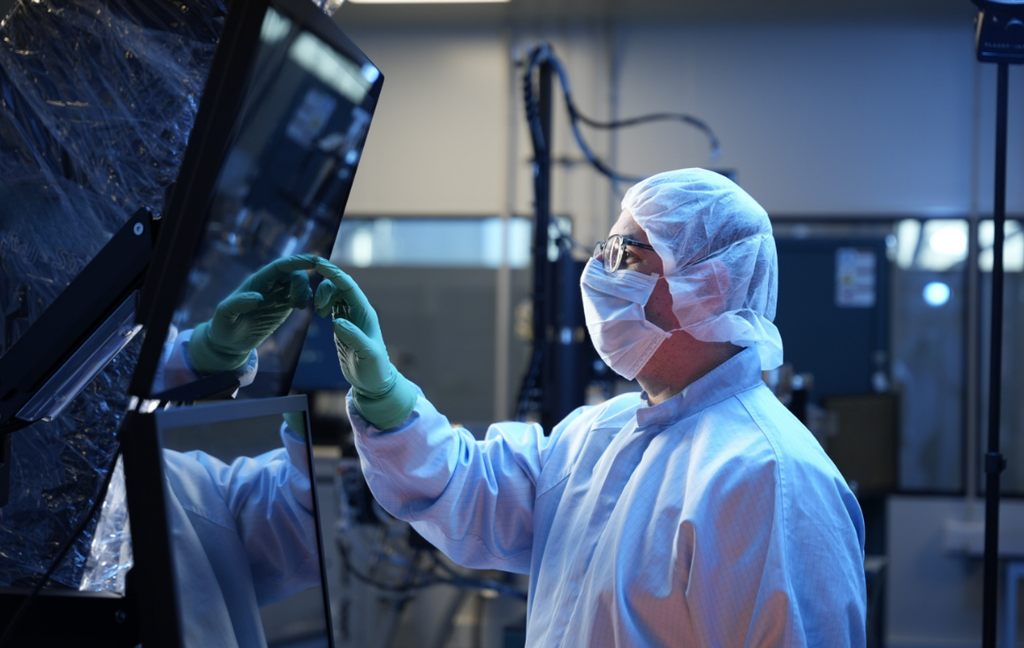
In 2018, IDEADED expanded its operations to a 100 m² laboratory with cleanroom facilities. In 2021, it relocated to Viladecans (Barcelona), where it gradually built up an infrastructure linking research, engineering and process development. Today, it has facilities covering approximately 7,000 m², including laboratories and a cleanroom dedicated to the development of semiconductor technologies. Progress is not merely about having more space: it is about bridging the gap between experimentation, prototyping, validation and industrialisation.
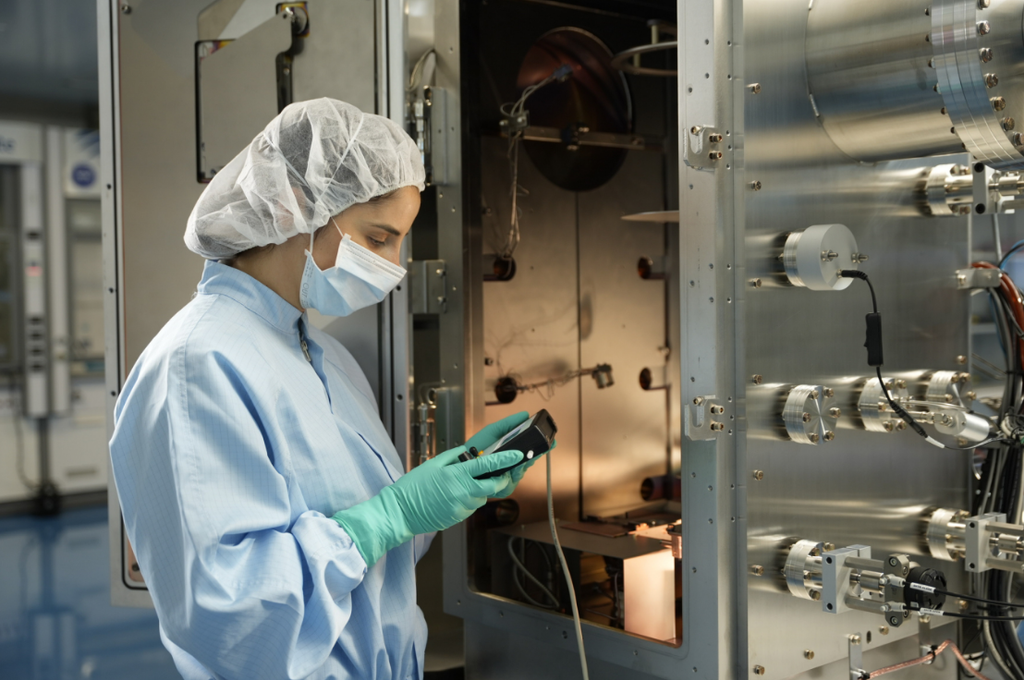
This development has ushered in a new phase, in which IDEADED is working to transform its scientific advances into its own manufacturing technology based on materials other than silicon. Its activities range from the preparation and deposition of these materials to the development of manufacturing processes, the characterisation of electronic devices and the validation of circuits.
The aim is to move towards a specialised manufacturing platform capable of transferring new semiconductor technologies from the laboratory to industrial settings. To this end, IDEADED combines process development with in-house design, modelling and validation capabilities, which are necessary to demonstrate the functionality of technologies that are still maturing. This integration enables the company to tackle one of the fundamental challenges posed by new materials: it is not enough simply to demonstrate their properties; it is also necessary to develop processes that are reproducible and compatible with industry requirements.
In the long term, the company aims to establish a foundry model specialising in new semiconductor technologies, offering manufacturing and development capabilities to third parties. This represents a different approach to that of the major conventional chip manufacturers, focusing on exploring and industrialising technologies that could open up new possibilities for computing.
The development of beyond-silicon and beyond-CMOS technologies is part of a broader ambition: to drive a new generation of computing. IDEADED is working to transform advances in new materials and devices into more efficient and scalable computing architectures, capable of integrating with advanced quantum control technologies. Its roadmap links these developments within a single process: demonstrating fundamental technological advances, scaling up the architectures, developing functional hybrid systems and, finally, converting that integration into useful computing power for high-value applications. Thus, advanced semiconductors and quantum control form part of the same technological vision aimed at overcoming the limitations of conventional computing.
The industrial dimension is inseparable from this vision. In 2025, the Spanish Society for Technological Transformation (SETT) formalised an investment of 9.5 million euros in the company. This support is driving the plan to expand and upgrade its infrastructure and equipment in Viladecans, with the aim of strengthening its capabilities for developing and scaling up technologies based on new materials. IDEADED also brings together professionals of many different nationalities, reflecting the need to combine scientific knowledge, engineering and industrial execution.
The challenge, however, extends beyond a single company. Europe has universities, research centres and talent capable of producing world-class science, but turning that knowledge into competitive industrial technologies remains one of its greatest challenges. Between academic research and commercial-scale manufacturing lies a crucial gap in which pilot plants, specialised infrastructure and process development capabilities play a fundamental role.
It is precisely in this area that IDEADED seeks to add value. Its infrastructure in Viladecans and the development of its own manufacturing technologies represent a commitment to building industrial capabilities in Europe centred on new materials and semiconductor processes. This is because technological autonomy does not depend solely on manufacturing more chips: it also requires the development of materials, processes, intellectual property and infrastructure that enable us to play a part in defining the critical technologies of the future.
From Viladecans, IDEADED aims to help build that capability. It does not aspire to manufacture the end-user computers that the world will use, but rather to develop some of the technologies upon which new generations of computing systems can be built.
Its journey, from the very first laboratories to the development of an advanced technological infrastructure, reflects a simple yet demanding idea: in semiconductors, imagining the future is only the beginning. The difficult – and the important – part is making it a reality.